Thursday, April 30, 2009

Listening Session 4/28/09; "Old and New"


Wednesday's listening presentation was based on the theme of "Old and New." Naturally, we started by listening to the classic recording of some of the earliest music know for brass ensembles, the Gabrieli recording made by the combined brass sections of the Philadelphia Cleveland Chicago Symphony Orchestras. If you own one brass ensemble recording, this is a must. The title of this Sony CD "The Antiphonal Music of Gabrieli", and the composition we heard was Canzon septimi toni No. 2.

We then heard a different Telarc recording, made by the Empire Brass in 1985 along with some other Boston brass musicians. Despite being recorded in 1968, the digital remastered CD sounds remarkably clear. One thing we noticed between the two groups, was the the Empire Brass observed different tempo relationships at the meter changes, and had a deeper sound due to the tubas playing in the lower octaves. The Empire Brass has also released a second Gabrieli recording (re-issue?) , "The Glory of Gabrieli" with the New York Philharmonic and Boston Symphony brass sections.

We then heard both old and new music from the American Brass Quintet. Battle Suite, by Samuel Scheidt (1587-1654) is from the Delos recording "American Brass Quintet plays Renaissance, Elizabethan, and Baroque Music." Everything on that CD was composed prior to 1750.
In contrast, the works on their recording "American Premiers" featured works written between 1989 and 1993, and includes works by Shculler, Sampson, Welcher, and Jan Bach. We heard the Gunther Schuller Brass Quintet No. 2 and David Sampson's Distant Voices. Desite the chronological gap between the compositinal eras and styles of both of these recordings, it is noteable that there are some similarities, such as the use of alternating textures, dynamics through orchestration, and the exploitation of both the ability for brasses to sound loud and majestic, as well as delicate and mysterious or solemn.

[Image above from the new website for the Los Angeles Brass Ensemble. Give them a listen]

Wednesday, April 29, 2009

Non-Traditional Brass Ensembles


On Monday, we listened to several groups that fall under the category of "non-traditional" or "crossover" brass ensembles. Among them was Metalofonico, which is comprised of members of the Atlantic Brass Quintet, the Meridian Arts Ensemble, the Los Angeles Philharmonic, the Mexico City Symphony, and percussion from the University of Buffalo. The piece we heard is an original composition by Jon Nelson, professor of trumpet at the University of Buffalo, and founding member of the MAE, called Insomnio. In it, you may have heard influences of Ives, Tomasi, and Frank Zappa. You can hear Metalofonico on their myspace page here.

From the CD "Brassil plays Brazil", we heard track six, Gonzagueando, by José Ursicino da Silva ("Duda"). Duda combines typical Brasilian folk/pop music, but in a well crafted way, and the Quinteto Brassil plays brilliantly. You can order this CD here.

Ryhthm and Brass, from their recording Sitting in An English Garden." We heard track fifteen, Money/Lollipop Guild/Eclipse, which combines elements of the Pink Floyd and the Wizard of Oz. Rhythm and brass are best known for the fine playing, but also presenting the brass quintet in a new light, with the addition of percussion, keyboards, synthesizers, and elements of jazz and rock. You can read about and listen to Rhythm and Brass at their myspace page here.

One of my favorite Balkan Brass Bands is the Kocani Orkestar, from Macedonia. We heard Solo Tapan from their recording "Kocani Orkestar; Gypsy Brass Band." Kocani Orkestar is non only a Balkan Brass band, but they combine elements of "Western" popular music. I recommend listening to Romani Kaj on their myspace page here.

Finally, representing both "non-traditional" and "crossover", we heard the Bollywood Brass Band. They have combined the Indian Raga style of music used in films from "Bollywood", with elements of funk, jazz, and perhaps a bit of the British Brass Band tradition. We heard Mere Yaara Dildara from their recording "Rahmania; the music of A.R. Rahman" What, or where is "Bollywood"? It is the nickname for the film industry in Mumbai India (the Hollywood of India). The nickname combines the "B" (from Bombay, the former name of Mumbai) with the term "Hollywood".

The most exciting when you combine disparate elements, especially in music, is that you end up with a very interesting and appealing new genre. We have talked a lot about our history and traditions in brass ensemble literature, but never forget that there is a future - one that we all may potentially be part of creating.

Wednesday, April 15, 2009

New Orleans Brass Bands; An American Original


Blaine's presentation today included selections by the Americus Brass Band, the Eastern Iowa Brass Band, Symphonia and the Rebirth Brass Band. As I mentioned in class, we must be sure to include the tradition of New Orleans style brass bands in our study of Brass Ensemble Literature, despite the fact that it falls under the category of "non-classical" music. Firstly, it is the only brass ensemble tradition that originated in the United States. Secondly, like all brass ensembles, it is interesting to note how they take on the challenge of repertoire with a combination of original compositions, treatments of standard jazz and dixieland tunes, and "covers" of popular music genres such as Motown, R & B, pop, and even latin jazz. This style of brass ensemble was instrumental in the development and spread of American jazz, and the fact that this genre still thrives today (with the likes of the Dirty Dozen Brass Band, Rebirth, and many others) is a testament to its staying power and helps secure the future of this style. Here are some concepts and links you will find valuable for further research:

Tuesday, March 03, 2009

Brazz Brothers


Monday, we all enjoyed viewing this promotional video of the Brazz Brothers. Like good travel writing, this video makes you want to "be there" - to try playing these different styles of music. Not only is it entertaining, but entices the listener and inspires fellow musicians.

I like the fact that a "niche" can be multifaceted. In their case, the Brazz Brothers not only specialize in jazzy selections, but excel at combining and celebrating music of diverse cultures such as African, Japanese, and Norwegian. Additionally, they are very accomplished singers in multiple languages.

Thursday, February 19, 2009

Geographical Brass Ensembles


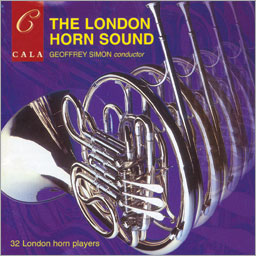
Jessica's presentation on Wednesday included the CDs Dallas Trumpets and The London Horn Sound. Both were outstanding recordings, and both have a geographical connection, signifying the unique qualities of the sound styles of those two places.

Our library has a copy, or you can buy Dallas Trumpets online here. On Arkiv music, they also list another recording called Music for Festive Occassions.

The London Horn Sound
is part of a larger series of "London Sound" recordings available on Cala Records. The series includes The London Trumpet Sound and the London Trombone Sound, in addition to cello, double bass and viola ensembles.

Monday, February 09, 2009

Cor de Chasse and English Cornett and Sackbut Ensemble


Today we heard a few selections of Cor de Chasse (hunting horn) ensembles. Here is a unique YouTube video synchronizing the tempo of a horn call with the tempo of the horse's hooves.

Here's another featuring a real ensemble


The recording of Italian Renaissence brass music was by the English Cornett and Sackbut Ensemble. The name of the album was titled Accendo, on the Deux-Elles label.

Monday, February 02, 2009

Moravian Brass and Trombone Shout Bands

Today, I mentioned two rich brass ensemble traditions; Moravian Brass and Trombone Shout Bands. Here are some links and a great video to whet your appetite.
Click below for an inspirational performance by the Sweet Heaven Kings video of their White House Christmas appearance

Check out the inspirational playing at a funeral by The Madison Clouds Shout Band video on YouTube.

Here's a link that brings that allows you to see recording details, and hear samples from a Folkways Recording called Saints' Paradise

Wednesday, January 28, 2009

Arnold and Trombones de Costa Rica


Today we listened to the Symphony for Brass, Op. 123 by Sir Malcom Arnold as performed by the Philip Jones Brass Ensemble, from their Decca CD with conductor Keith Snell.

We also heard several selections from the CD "Imagenes" by the Trombones de Costa, including "Motives" and "Imagenes", both by the Costa Rican composer Vinicio Meza.

Wednesday, January 21, 2009

Welcome Spring 2009 Students

Welcome back to school, I think we (all four of us!) are going to have a great semester. You now have the updated syllabus and composer table and a good idea of the assignments. Be sure to peruse older posts on this blog, as well as the student blogs from the past two years listed on the sidebar to the right. You can even get a sneak peak at my Historical Perspectives lecture by checking out this post, or this one. I also wanted to remind you that instead of class Monday, I will meet with each of you individually to discuss your blog and other projects.

To kick off the semester, and in honor of Martin Luther King Jr. Day, check this You Tube video by the Hypnotic Brass Ensemble:

Saturday, September 13, 2008

Guide to the Brass Quintet


I just discovered a great online project created by Dr. James Boldin from The University of Louisiana at Monroe horn brass quintet excerpts.

The Guide to the Brass Quintet is an excellent resource for horn players, highlighting the value of chamber music study, as well as an excellent guide to serious repertoire of the brass quintet.

If you are a horn player, especially one who is striving to form a serious brass quintet to audition for one, this is the resource for you. Nice work Dr. Boldin.

Thursday, July 10, 2008

Quadre Horn Quartet

Patrick just notified me that Quadre, the ensemble that was the subject of his final project, has posted his interview on their blog:

Patrick Rappleye got in touch with me in April. He is a masters student in horn performance at the University of Iowa. He was asked to put together a presentation on a brass ensemble and he chose us! What follows are the interview questions he sent me along with my answers. You can also see this interview along with other interesting tidbits that involve brass ensembles from around the world by going to Patirck's blog here.

PATRICK: How do you book concerts? Do you have a management service or do it on your own and what are the main difficulties?

DANIEL: QUADRE is a self-managed ensemble. Our strategy for booking concerts is two fold.

First, we have a series of home concerts we produce in the San Francisco Bay Area where we are based. We usually present 3 to 4 home concert series a year. Venues for these series include one or more of the following: performing art centers, community music schools, churches, and private homes. These events give us a chance to regularly connect with our local supporters. They also give us the opportunity to try new things out programmatically.

Second, we set up tours around the country. They usually last from 7-10 days although we were once on the road for a whole month. We find presenters – those that book us for concerts – through booking conferences and associations (Western Arts Alliance, Chamber Music America), our online research of venues in different geographic areas, and our own personal contacts.

Both of these strategies take a great deal of work. We are a nonprofit organization with 4 artists, one paid staff-person (myself), 4 volunteers, and a board of directors made up of 7 citizens from the community. In regards to booking concerts, the volunteers and I construct the tours (contracts, travel), manage the books, and handle the fundraising/development. The board helps ensure the long-term health of the organization and maintain its financial stability. Administratively, the artists organize and decide the programming, contribute potential leads and contacts, and help out as needed (grants, artistic partnerships.)

Of the two strategies above, the first one is contingent on being open to potential partnerships and collaborations. Most of this work is made possible due to revenue from contributed (grants and personal appeals) and earned sources (ticket sales and performance fees.) For the second strategy of tours, most of our revenue comes from performance fees with a little supplemental income coming from merchandise sales (sheet music and CDs).

The main difficulty with both of these core activities is finding the partners and clients to make them possible. After ten years in the business, it is easier although it is still a constant challenge.


Monday, March 24, 2008

Poulenc Brass Trio


Today we began the "Landmark Works" unit of our class, with a listening/score study of Poulenc's Brass Trio. Here are a few quotes from several sources about this piece and its composer:

From ClassicalNet:
"Poulenc behaved like a sophisticated eccentric (he once chatted up a stupefied Cannes bartender about an ingenious harmonic progression he managed to pull off that morning), and the eccentricity not surprisingly showed up in his music. Many have called attention to his split artistic personality, "part monk, part guttersnipe," but really he has many more sides. Like most French composers of his generation, he fell under the influences of Stravinsky and Satie. Yet he doesn't imitate either. You can identify a Poulenc composition immediately with its bright colors, strong, clear rhythms, and gorgeous and novel diatonic harmonies. He is warmer and less intellectual than Stravinsky, more passionate and musically more refined than Satie."
"Francis Poulenc: Shocking the bourgeoisie" from The Timid Soul's Guide to Classical Music by James Reel:

"All right, it's an exaggeration to say that Francis Poulenc was the Sid Vicious of 1920s French art music. But Poulenc and his circle hit the classical music scene with almost the same biting, nihilistic force with which the punk movement slammed into popular music in the 1970s and early '80s.

Both movements were big on
irony and mockery, including self-mockery. The goal was to shock the bourgeoisie, to burn off the sugar coating that music had been collecting in the previous decades. And both movements were absorbed into the mainstream in barely a decade. Francis Poulenc joined a circle of young composers gathered around the eccentric Erik Satie, the famous scribbler of whimsically titled pieces ("Gymnopédies,'' "Vexations'' and the like) with nonsensical comments running through the scores.

Satie's followers opposed the vagueness of Impressionism, the style typified by Claude Debussy's "Prelude to the Afternoon of a Faun.'' They advocated simplicity and clarity. They also thought emotions should be more restrained than they had been in late 19th century Romantic music, although the Satie set eagerly made exceptions to the rule of restraint for the purposes of satire.

In 1920, a critic dubbed the half-dozen leading members of this circle - Poulenc, Darius Milhaud, Arthur Honegger, Georges Auric, Germaine, Tailleferre and Louis Durey - "Les Six.''

As a composer, Poulenc was largely self-taught, and one method of self-education is imitation. Many of Poulenc's early works, including a sonata for two clarinets and a
brass trio, mimic the ironic Neoclassicism of Igor Stravinsky."

Saturday, March 22, 2008

Empire Brass

The Empire Brass Quintet has had a profound influence on my career, as well as hundreds of their students. In class, some of you have inquired about what they have been up to lately. Here is an excellent review of a recent performance they gave in North Carolina.

Monday, February 18, 2008

Large Brass Ensemble Listening


Today, we heard the following recordings of large brass ensembles:

British Music for Brass by the Phillip Jones Brass Ensemble with Howard Snell. More recordings by PJBE here.

We heard the Malcolm Arnold Symphony for Brass.


Brass Festival by the Scandanavian Brass Ensemble. We heard Vagn Holmboe Concerto for Brass Op. 157


Art mentioned the Finnish Music Information Centre which is a a great resource to obtain free music by Finnish composers.


Powered by ScribeFire.

Saturday, February 16, 2008

Russian Brass Quintet Music


On Wednesday, we heard most of this recording made by the Montanus Brass Quintet. It contains some numerous significant works for brass quintet by Russian composers, as well as a few transcriptions that work well for quintet.

Hear the CD (allow pop-up for player) or here (hold mouse over notes icon until icon spins)

Here is the track-listing to help you with your research on these composers, works and arrangers:


Powered by ScribeFire.

Sunday, December 16, 2007

Welcome

Welcome to ABEL Central, the official blog for the Advanced Brass Ensemble Literature course at the University of Iowa. I will be updating this blog throughout the semester (Spring 2008), but may refer you to older posts from previous semsters. This blog is meant to complement our ICON site, which include course materials, assignments, and grades. I look forward to working with all of you and feel free to contact me if you have any questions.

Monday, April 02, 2007

Score Study - Etler and Tomasi


This morning we studied the scores and recordings of the following works:

  • Quintet for Brass Instruments (1963) by Alvin Etler
    Atlantic Brass Quintet - Five Chairs
    Summit Records DCD396

  • Fanfare Liturgique by Henri Tomasi
    Millar Brass Ensemble
    Crystal Records CD 433

Sunday, April 01, 2007

3-28-07 Listening

Full Band - spring 2004Today we had an impromptu listening session of the following recordings:

Je Me Souviens: La Musique du Royal 22e Régiment
The Van Doo's Band of the Royal 22e Régiment, 1964
RCA PCS 1006/1007


1. Fanfare for a Dignified Occassion
2. Vive la Canadienne

We also heard some selections from the Atlantic Brass Quintet Fanfares and Passages CD:

Passages, a work we commissioned from Boston composer Sam Headrick and Jeff Luke's arrangement of Hungarian Rhapsody No. 2 by Franz Liszt.

Friday, February 09, 2007

Alphorn Ensembles

The Swiss Alphorn SchoolAlphorns have a long tradition in Europe, and it is fascinating to see how much information there is about Alphorn ensembles on the web. Be sure to check ou the Boston Globe article listed below, and pay closer attention to the next Ricola TV commercial you see!

From the Groves Music Online article on Alphorn:

"Alphorn [Alpenhorn] (Ger.; Fr. cor des alpes).

Wooden trumpet of pastoral communities in the Alps. The name is also conveniently used to cover similar instruments of Scandinavia, Russia, the western Slav countries, Hungary, Romania and, up to the 19th century, some of the highlands of Germany. Szadrowsky's vague reports of alphorns in the Pyrenees and the Scottish highlands are unconfirmed. An alphorn is made of a young fir, lime, poplar etc.; a mountainside tree curving upwards from the roots is often chosen, giving an upturned bell. The wood is longitudinally halved by axe or saw and each half is hollowed. The two pieces are reunited under strips of bark or binding of roots or gut. The mouthpiece may be either cut in the wood or made separately. In several areas the folded shape of a trumpet is sometimes imitated. The commonest length of the alphorn is about 185 cm, in which case its range extends to the 5th or 6th harmonic (as quoted by Beethoven at the end of the Pastoral Symphony). Many alphorns are 120 cm in length or less; however, instruments 335 cm long have been known in Switzerland since the 16th century, and specimens up to 520 cm occur in Slovakia. Today the standard length ranges from 340 cm to 360 cm for alphorns tuned in F or G. Tunes may then ascend to the 12th harmonic or even higher.

Alphorns were known best as herdsmen's calling instruments, serving also in some areas to summon to church and formerly to war. They may also be numinous: among the Mari of Russia the long wooden trumpet is made for the spring festival and afterwards sacrificially burnt or hidden in a sacred place. Overall likeness in making and using alphorns, and their distribution, suggest that they possibly may have originated among post-Celtic peoples of the Migration Era. There is no firm evidence of prior existence; ‘cornu alpinus’ in Tacitus is less than proof of a wooden trumpet, of which the earliest specimen, from the 9th-century Oseberg ship (Oslo, Vikingskiphuset), supports iconographic suggestions that wooden trumpets of moderate size were used as summoning and military instruments in early medieval northern Europe in addition to their pastoral functions."

Some Alphorn Ensemble Links:

Boston Globe Article

Rocky Mountan Alphorns

St. Moritz Alphorn Ensemble

International Alphorn Society


New Jersey Workshop for the Art

Swiss Alpine Music

Thursday, January 25, 2007

Listening Session - January 30, 2008

Listening Session - January 30, 2008

Kocani CD
On Wednesday, I presented a collection of recordings of brass bands from outside the typical western, or Anglo-American tradition. They were:


ENSEMBLE: Fanfare Ciocarlia
RECORDING: Radio Pascani
TRACKS: 2 and 3 - "Rusasca de la Buzdug" and "Sirba de la Zece Prajini"
WEBSITE: http://www.asphalt-tango.de/fanfare/artist.html

ENSEMBLE: Kocani Orkestar; A Gypsy Brass Band
RECORDING: Long Distance
TRACKS: 1 "Solo Tapan"
WEBSITE: http://www.crammed.be/kocani-orkestar/index.htm

ENSEMBLE: Jaipur Kawa Brass Band
RECORDING: Fanfare Du Rajasthan
TRACKS: 9 adn 13 - "Paayaliyaa" and "Chameli"
WEBSITE: http://www.musafirmusic.com/kawabrassband/

ENSEMBLE: The Bollywood Brass Band
RECORDING: Rahmania; The Music of A. R. Rahman
TRACKS: 1 - "Mere Yaara Dildara"
WEBSITE: http://www.bollywoodbrassband.co.uk/

ENSEMBLE: Zlatne Uste Balkan Brass Band
RECORDING: No Strings Attached
TRACKS: 1 and 2 - "Simplon Cocek" and "Rumelaj"
WEBSITE: http://www.zlatneuste.org/

ENSEMBLE: Fanfare Ciocarlia
RECORDING: Baro Biao; World Wide Wedding
TRACKS: 10 and 14 - "Hora lui Pusac" and "Balaseanca de 8 ore"
WEBSITE: http://www.asphalt-tango.de/fanfare/artist.html

You can also find some suggested recording on this Amazon list link: "Prophetic Gypsy Brass"

I hope you all enjoyed listening to this music as much as I did and I look forward to hearing your presentations.