Saturday, February 24, 2018

Oskar Böhme Brass Sextet


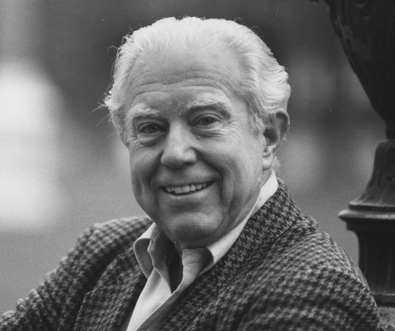
Oskar Böhme (1870-1938)

On Monday we will listen to Oskar Böhme's Trompetensextett (Trumpet Sextet) in E-flat minor, op. 30. Published in 1907, the work was originally orchestrated for 1 cornet, 2 trumpets, "basstrompet in E-flat (Althorn)", "Trombone (Tenorhorn)", "Tuba hoch B. (Bariton)". Modern editions indicate an orchestration for 3 trumpets (with an alternate horn part substitute for 3rd trumpet), trombone or baritone (alternate for horn), trombone or baritone, and tuba. Most current recordings use this version. Below are some biographical excerpts about Böhme.

From Grove Online (article by Edward H. Tarr)
(b Potschappel, nr Dresden, Feb 24, 1870; d ?Chkalov, Ural region, ?1938). German cornettist and composer. He is thought to have trained with his father, Heinrich Wilhelm Böhme (b 1843), a music teacher, and from 1885 he toured as a soloist. From 1894 to 1896 he played in the orchestra at the Royal Hungarian Opera House, Budapest. Between 1896 and 1897 he studied composition with Jadassohn at the Leipzig Conservatory. He then moved to St Petersburg, playing in the Mariinsky Theatre Orchestra from 1897 to 1921, teaching in a musical college on Vasilyevskiy Island from 1921 to 1930, and playing in the Leningrad Drama Theatre orchestra from 1930 to 1934. Like many people of German origin, he was banished by Stalin to Chkalov (now Orenburg) and taught at a music school there from 1936 to 1938. The year of his death is uncertain; one eyewitness claims to have seen him at hard labour on the Turkmenian Channel in 1941. He composed 46 known works with opus numbers, including a lavishly Romantic concerto in E minor op.18 for trumpet in A (1899), which has remained in the repertory. His brother Max William (1861–?1928) played in the Royal Hungarian Opera House orchestra from 1889 to 1908 and was the first professor for trumpet at the National Hungarian Royal Academy of Music from 1897 to 1908. He was also a member of the Bayreuth Festival Orchestra between 1891 and 1901; in 1908 he returned to his birthplace of Potschappel to open a music school.

From Brass Music Online:

Oskar Böhme
By Mikolaj Sluzewski

Oskar Böhme was one of the three German trumpeters – alongside Willy Brandt and Wilhelm Wurm – who at the turn of the 19th and 20th century happened to have a significant influence on Russian trumpet training, thus defining the role of the instrument in the European classical music for decades to follow.
While both the popularity of his works and Böhme himself suffered greatly from Stalinist repressions in 1930s, his compositions, written in the Romantic idiom, are being increasingly rediscovered and performed by orchestras, bands and solo artists all over the world.
Formative years and early career
Oskar Böhme was born on February 24, 1870, in Potschappel, a small town near Dresden, Germany, to a musical family of Wilhelm and Juliane Henriette Böhme. His father was a local musician, playing trumpet in a miners’ band and working as a music teacher in Dresden. Oskar as well as two out of his three brothers, Max William (called Willi) and Georg, learned to play trumpet from their father, and each of them went on to pursue a successful career in music, while the remaining third brother Benno became a wood sculptor.
From around the age of fifteen, Böhme began touring as a solo artist and probably played in smaller orchestras around Germany, including spa orchestras during summer seasons. Most of his activities in this period remain undocumented, however there are traces of his performances in the form of concert reviews from local newspapers reaching as far as Helsinki in September 1889. Oskar was also reported to have played together with his older brother Willi in Bayreuth in August of 1892.

Some sources suggest that Oskar studied trumpet and composition in the Leipzig Conservatory of Music until graduating in 1888, but it is probably not true. A more likely scenario says that during his traveling period Böhme took lessons from professor Gurlitt in Hamburg and Horovitz in Berlin, and later from professor Hertzfeld in Budapest.

From Budapest to Leipzig
It is said that in 1894 Böhme relocated to Budapest, where he joined his older brother Willi in the Royal Hungarian Opera House orchestra. Willi, who had settled in Budapest in 1889, went on to become the first trumpet professor at the National Hungarian Royal Music Academy (currently known as Franz Liszt Music Academy) in 1897, while Oskar left the city in 1896 to enter the Leipzig Conservatory – the same school another famous trumpeter and Böhme’s equal Eduard Seifert graduated in 1894.
Böhme, who by the time had already been an established trumpet player himself, attended the Conservatory for a year from 2 November 1896 to 1 December 1897 to study music theory, composition and piano – he was assessed “absolute beginner” as a pianist by one of his teachers, who nevertheless noted that Oskar shown great progress, developing proper technique and working command of the instrument to complement his overall impressive music skills.

From Böhme’s Leipzig period come a couple of his first original compositions. It is documented that two lieder and a scherzo for two trumpets and piano written by Böhme were performed during student recitals, on 7 May and 26 November 1897, respectively. Another early work, entitled “Prealudium, Fuge und Choral” for two trumpets, horn, and trombone was performed by Leipzig Conservatory students in 1898, after Böhme had already left the school.
Imperial Russia to Soviet Union
At the time of prosperity of German classical music schooling, the level of musical training in Russia was dramatically falling. It was then decided to attract prominent foreign musicians by offering them academic careers and performing opportunities that Western-European countries were becoming short of. Conservatories in Moscow and St. Petersburg were created in the 1860s by the initiative of Anton Rubenstein, founder of the Russian Music Society.
Oskar Böhme was one of the three notable German trumpet players (the other two being Wilhelm Wurm and Willy Brandt) who decided to take their professional career East in exchange for Russian citizenship – which was required in order to legally work there. Böhme moved to St. Petersburg, where he played cornet in the Mariinsky Theater Orchestra from 1897 (although some sources confirm only 1902) until 1921. During that period, he used his statutory 4-month summer breaks to go on concert tours in Germany and other European countries.
Between 1921-1930 Böhme taught at the Leningrad Military College in St. Petersburg, on Vasilyevsky Island where he lived. Subsequently, he returned to playing with the orchestra, joining the Great Drama Theater (officially known as Gorky Bolshoi Drama Theater, currently named Tovstonogov Bolshoi Drama Theater) where he stayed until 1934 – the year marking the beginning of the “Great Terror”.

Glorious legacy

During his life, and despite his later exile, Oskar Böhme was an esteemed musician, well known from his performance in numerous orchestras, and an accomplished composer with great contribution to Russian and European classical music, and brass music in particular. He left a total of 46 works, including a book of 24 etudes that has been an invaluable study material for several generations of trumpet players, and still is.
The most famous and most frequently performed pieces by Böhme are the Trompetensextett in E-flat minor, op. 30 (published in 1907 – here arranged by Brian Bindner for Brass Ensemble) and his Trumpet Concerto, op. 18 – first published in 1899 as a score for trumpet and piano, with orchestral version added in the following years. Originally written in the key of E minor with the solo for the A trumpet, it has been since transposed (by Franz Herbst in 1941) to F minor to be played on the B-flat trumpet.
The Trumpet Concerto, being the first composition of such scale for trumpet and orchestra, was considered groundbreaking at the time, exhibiting the capabilities of trumpet and bringing the perception of this instrument to a new height. Today, it remains one of the favorite trumpet pieces to perform both on admission and graduation exams, and a culminating example of Böhme’s masterful take on merging German tradition with Russian soul.

Last year, Edward Tarr released a letter about his discovery of Böhm's likely demise. Click here to view that post. 

Monday, February 12, 2018

Alabiev and Poulenc

Today in class we heard music by Alexander Alyabyev (also spelled Alabiev or Alabieff, and Aljabjew) and Francis Poulenc.

Alabiev was a Russian composer who lived  from 1787 to 1851. His brass quintet, written in 1847 certainly predates the Ewald Quintets and some of the Bellon brass quintets, written 1848-1850), so it is definitely one of the earliest works for brass quintet. 


Alexander Alabiev (1787-1851)

Wikipedia Bio:
Alexander Aleksandrovich Alyabyev (15 August1787 – 6 March 1851), also rendered as Alabiev or Alabieff, was a Russian composer known as one of the fathers of the Russian art song. He wrote seven operas, twenty musical comedies, a symphony, three string quartets, more than 200 songs, and many other pieces.
Born to a wealthy family in Tobolsk in Siberia, Alyabyev learned music in his early years. He joined the Russian Army in 1812, during the Napoleonic War, and fought as an officer until 1823. He participated in the entry of the Russian forces into Dresden and Paris, and he won two awards. After the mysterious death of a man he spent all night gambling with in February 1825, he was arrested on a charge of murder. While the evidence was not conclusive, Tsar Nicholas I expressly ordered him into exile to his native town of Tobolsk. Freed in 1831, he spent some years in the Caucasus before returning to Moscow, where he died in 1851.
Bio from All Music by :
Born in 1787, Alexander Alyabyev was a versatile and accomplished Russian composer working in the Classical, tradition, his oeuvre including chamber music, symphonic works, and operas. In 1815, he composed his String quartet in E flat major, a work which demonstrated his ability to write for string ensemble. Alyabyev started composing for the stage in the 1820s; his operas include The Water Nymph (Based on Pushkin. as well as works inspired by the plays of Shakespeare -- The Merry Wives of Windsor, The Tempest, and The Enchanted Night (based on Midsummer Night' Dream. In 1834, he published a book of Ukrainian folk melodies. Alyabyev died in 1851.
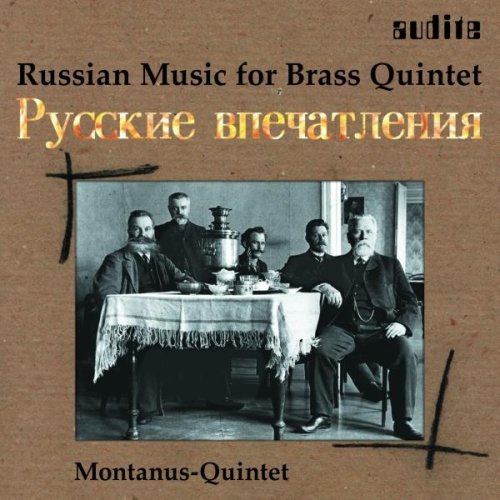
The quintet is written in one movement, with two sections. The first, Adagio, has a dark and somber mood, which is quickly broken by the Allegro Vivace, which features fanfare-like themes dance-inspired marches reminiscent of Verdi's and Boehme's sextet. The recording we heard was by the Montanus Quintet from their recording "Russian Music for Brass Quintet". Click here to listen to the recording on YouTube, or click here to order it from Amazon digital music. It was also noted in class that the tuba player plays most of the part an octave down from the Randal Block edition available from Pepper. I believe the original called for the higher octave. To order the quintet (parts, no score) from Pepper click here.


Francis Poulenc's Brass Trio. This piece has a particular charm, and is very specific about articulation, including apparently contradictory indications regarding short or long eighth notes. The piece is written for horn, trumpet and trombone and the recording we heard was from a Naxox album of chamber music by Poulenc with Hervé Jolain on horn, Guy Touvron on trumpet, and Jaques Mauger on trombone.

Here are a few quotes from several sources about this piece and its composer:

From ClassicalNet:
"Poulenc behaved like a sophisticated eccentric (he once chatted up a stupefied Cannes bartender about an ingenious harmonic progression he managed to pull off that morning), and the eccentricity not surprisingly showed up in his music. Many have called attention to his split artistic personality, "part monk, part guttersnipe," but really he has many more sides. Like most French composers of his generation, he fell under the influences of Stravinsky and Satie. Yet he doesn't imitate either. You can identify a Poulenc composition immediately with its bright colors, strong, clear rhythms, and gorgeous and novel diatonic harmonies. He is warmer and less intellectual than Stravinsky, more passionate and musically more refined than Satie."
"Francis Poulenc: Shocking the bourgeoisie" from The Timid Soul's Guide to Classical Music by James Reel:
"All right, it's an exaggeration to say that Francis Poulenc was the Sid Vicious of 1920s French art music. But Poulenc and his circle hit the classical music scene with almost the same biting, nihilistic force with which the punk movement slammed into popular music in the 1970s and early '80s.

Both movements were big on
irony and mockery, including self-mockery. The goal was to shock the bourgeoisie, to burn off the sugar coating that music had been collecting in the previous decades. And both movements were absorbed into the mainstream in barely a decade. Francis Poulenc joined a circle of young composers gathered around the eccentric Erik Satie, the famous scribbler of whimsically titled pieces ("Gymnopédies,'' "Vexations'' and the like) with nonsensical comments running through the scores.

Satie's followers opposed the vagueness of Impressionism, the style typified by Claude Debussy's "Prelude to the Afternoon of a Faun.'' They advocated simplicity and clarity. They also thought emotions should be more restrained than they had been in late 19th century Romantic music, although the Satie set eagerly made exceptions to the rule of restraint for the purposes of satire.

In 1920, a critic dubbed the half-dozen leading members of this circle - Poulenc, Darius Milhaud, Arthur Honegger, Georges Auric, Germaine, Tailleferre and Louis Durey - "Les Six.''

As a composer, Poulenc was largely self-taught, and one method of self-education is imitation. Many of Poulenc's early works, including a sonata for two clarinets and a brass trio, mimic the ironic Neoclassicism of Igor Stravinsky."

Wednesday, January 24, 2018

"The Making of Gabrieli"

National Brass Ensemble - Gabrieli
Here is the video we started watching at the end of class today. It's called "The Making of Gabrieli", and it is an excellent 25-minute documentary on the making of the recent recording by the National Brass Ensemble which pays tribute to the historic Gabrieli recording by the Chicago, Philadelphia and Cleveland Orchestra brass sections.


For more information or to purchase their recording on Amazan (since Amazon mispelled Gabrieli, I mispelled Amazon), click here.


Wednesday, January 17, 2018

Acute Coryza by Anthony Coleman


Tilt Brass

At the beginning of class we listened to a recording of Acute Coryza by Anthony Coleman performed by Tilt Brass Sextet. It is one of many brass ensemble recordings I recently discovered that are available on Apple Music. I will occasionally be selecting works like this for random "Sight Hearing" sessions throughout the semester. 

From Coleman's biography on the New England Conservatory (NEC) website:
From the Sarajevo Jazz Festival to the Jewish Culture Festival in Krakow, Poland, Anthony Coleman’s musical odyssey has taken him through many cultures and led him to wear many hats as composer, improvising keyboardist, and teacher. Coleman joined the NEC faculty in 2006, returning to a school where he himself studied in the 1970s, during the birth of NEC’s Contemporary Improvisation program (then called Third Stream). In addition to his work as a studio teacher and ensemble coach, Coleman works with NEC’s Contemporary Improvisation students to organize a departmental concert each spring.

Thursday, April 20, 2017

Brass Ensemble Music from Other Cultures

Fanfare Ciocarlia

On Wednesday I gave a listening presentation titled "Brass Ensemble Music from Other Cultures". Below is a table with the playlist, providing information on the selection, ensemble, recording and origin, as well as links to each ensemble.

The details of each work are listed in this order:
Title
Ensemble
Recording
Origin

Rusasca de la Buzdug
Fanfare Ciocarlia
Radio Pascani  
Romania (Balkan Brass Band)

Mundo Cocek
Boban I Marko Markovic Orkestar
Golden Horns - Best of Boban i Marko Markovic Orkestar
Serbia (Balkan Brass Band)

Sword Fight
Bollywood Brass Band
Movie Masala
England (Indian)

El Carretero   
Pepe Gutiérrez & Mariachi De Pepe Villa
Vintage Mexico No. 158
Mexico (Mariachi)

Entierrenme Con La Banda   
Banda el Recodo
Del Pueblo
Mexico (Banda)

Y Te Vas

Banda Carnaval
Las Vueltas de le Vida
Mexico (Banda)

Tangimausia
Beulah College Band
Ifi Palasa - Tongan Brass
Tonga (Traditional)

In your Garden Twenty Fecund Fruit Trees
Frank London's Klezmer Brass Allstars
USA (Klezmer)

Always Remember
The Tigers
Dancing with Daddy G
USA (Trombone Shout Band/Gospel)

Doghouse Polka
Kris and the Riverbend Dutchmen
Partners, Brothers, And Friends
USA (Polka)

We also viewed these two videos:

Guca (Balkan) Brass Festival 

Wedding Band Jaipur (India) 

Finally, at the conclusion of class, I mentioned the correlation between the similarity of styles and instrumentation in German/Austrian Polka and Northern Mexican Banda style. This is explained below in the article "Does Mexican Music have German Roots?" by

Mexican Music Style Influenced by Germans

Music from the northern part of Mexico, norteño, meaning "northern," or música norteña, "northern music," was influenced by German settlers in Texas around 1830. It is no coincidence that some types of Mexican music have the German polka "oom-pah-pah" influence.

Migration Phenomenon

There was a large migration of Germans to southern Texas from the 1830s to the 1840s. According to the Texas State Historical Association, the largest ethnic group in Texas born in Europe or whose parents came from Europe hailed from Germany. By 1850, Germans made up more than 5 percent of the entire population of Texas. This part of Texas became known as the German Belt.


Monday, April 10, 2017

Gagarara, Pitch Black and Berio Call

Today in class, we listened to an eclectic mix of recordings including works by Brian Martinez, Luciano Berio and Jacob TV. First up was a YouTube video of the U.S. premiere of Gagarara by Spanish composer and winner of the Isla Verde Brass Festival composition competition, Brian Martinez. Below you can view both the Tritantic Brass Ensemble video as well as the world premiere in Argentina:


We spent the rest of the class time listening to a recent recording called "Pitch Black" by Brass United (Channel Classics CCS 38717). From it we heard Call (St. Louis Fanfare)
by Luciano Berio and the title track, Pitch Black by Jacob TV. Pitch Black uses an interview by Chet Baker as source material, which is then looped and manipulated to provide a rhythmic and contextual backdrop for the brass quintet, which was transcribed from the original saxophone quartet. 


Also on this recording is Pulcinella 2.0, which consists of ten arrangements for brass quintet and harpsichord of the original source music that Stravinsky used for his landmark work. Some of the pieces include works by Pergolesi, Gallo, Monza.
 

Monday, March 27, 2017

Carter and Tymoczko

Elliot Carter (1908-2012)
Today in class we heard two major works for brass quintet: Elliot Carter's Brass Quintet (1974), as recroded by the American Brass Quintet and Rube Goldberg Variations for Brass Quintet and Prepared Piano by Dmitri Tymoczko, as recorded by the Atlantic Brass Quintet. 

Both works are extremely unique, so I have asked you to blog about your thoughts on each piece by answering the following questions about each piece:
  1.  What is the overall affect of the piece? How does it make you feel? How does the composer achieve that?
  2. List three remarkable or noteable aspects of the piece. Include measure numbers or rehearsal numbers or letters and explain your answer.
  3. Comment on the harmonic, melodic and rhythmic language used. What are some of the challenges presented in the performances of this work created by these languages?
  4. Finally, compare and contrast both works. What are their similarities? What are their differences?
I look forward to reading your responses in your blogs and be sure to reach each others' blog post replies.


To listen to the Tymoczko again, click on the links below:
  1. http://dmitri.tymoczko.com/rubegoldbergm1.m4a
  2. http://dmitri.tymoczko.com/rubegoldbergm2.m4a
  3. http://dmitri.tymoczko.com/rubegoldbergm3.m4a
  4. http://dmitri.tymoczko.com/rubegoldbergm4.m4a


Monday, March 20, 2017

Arnold Symphony for Brass and Tomasi Fanfares Liturgiques

Tuesday we listened to two great original works for brass choir: Malcolm Arnold's Symphony for Brass and Henri Tomasi's Fanfares Liturgiques.

Sir Malcolm Arnold
The recording of Sir Malcom Arnold's Symphony for Brass was done by the Philip Jones Brass Ensemble. The piece was written in 1978 with the PJBE standard instrumentation of four trumpets, one horn, four trombones and one tuba. Arnold was born in Northampton, England in 1921 and after hearing Louis Armstrong play, he decided to learn the trumpet at age twelve. He attended the Royal College of Music and studied trumpet with Gordon Jacob. In 1957, Arnold won an Academy Award for the music to epic film The Bridge on the River Kwai. According to Music Academy Online: 

Malcolm Arnold moved to Ireland in 1972, where he reveled in the lush scenery and lively Celtic music. Here, however, his behavior became increasingly erratic and, in 1977, his second marriage collapsed and he returned to England, exhausted and unable to work for several years. Significant works eventually emerged during this unhappy period, such as the Trumpet Concerto, Symphony for Brass and the Eighth Symphony.

Oral history of Glyndebourne opera

Oral history of Glyndebourne opera
For more information about the PJBE, here is a link to the book The Odyssey of the Philip Jones Brass Ensemble by Donna McDonald available at Editions BIM.

Henri Tomasi
The recording of Fanfares Liturgique, by Henri Tomasi, was made by Grand Ensemble de Cuivres et Percussion des Hauts de France, with Alexis Malotchkine & Bernard Calmel. As you heard, it is a very powerful and well-crafted composition. The names of the movements are translated below, and as we discussed, the genre seems to be an "instrumental oratorio" - that is, a sacred brass choir version of a liturgical work. Of course there is no text sung, but the orator could be represented by the trombone solo of the second movement. Note also the return of the triumphant first theme, possibly a motif for the Christ figure, returns in the final movement. I also was reminded in several passages of the works Stravinsky, Respighi, Bach, and Dukas.
This work was originally called "Fanfares Concertantes" and was part of his opera Don Juan de Mañera. 


Movements: 
  • I. Annonciation (Annunciation is the term describing the moment when the angel Gabriel declared Mary to be the mother of God)
  • II. Evangile (Gospel, or the word of God)
  • III. Apocalypse (Apocolypse, or revelation?) Four Horsemen who are listed as Pestilence (disease epidemic), War, Famine, Death
  • IV. Procession du Vendredi-Saint (Good Friday Procession, a Christian celebration commemorating the crucifixion of Jesus)
For more information about Tomasi, go to the Tomasi page and for more listening, go to Tomasi on Naxos.

Wednesday, March 01, 2017

Arfen Owen Lecture

Today, we had the great pleasure of hearing famous Tenor Horn solosit Arfen Owen speak about the history of the British Brass Band tradition. It was a very enlightening lecture, especially when we learned that the origins of the British Brass Band included keeping mill workers out of trouble and to discourage unionization. 

Here are the YouTube videos we listened to:


I encouraged each of you to blog about your notes on the lecture, so I look forward to reading your impressions online. Check out this brief article on Four Bars Rest about Mr. Owen.

Sunday, February 26, 2017

Bohme Sextet


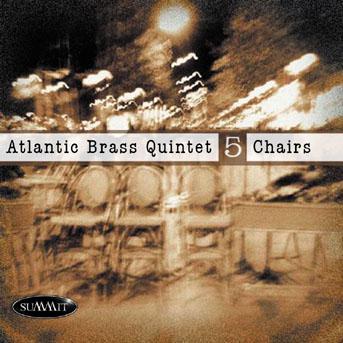
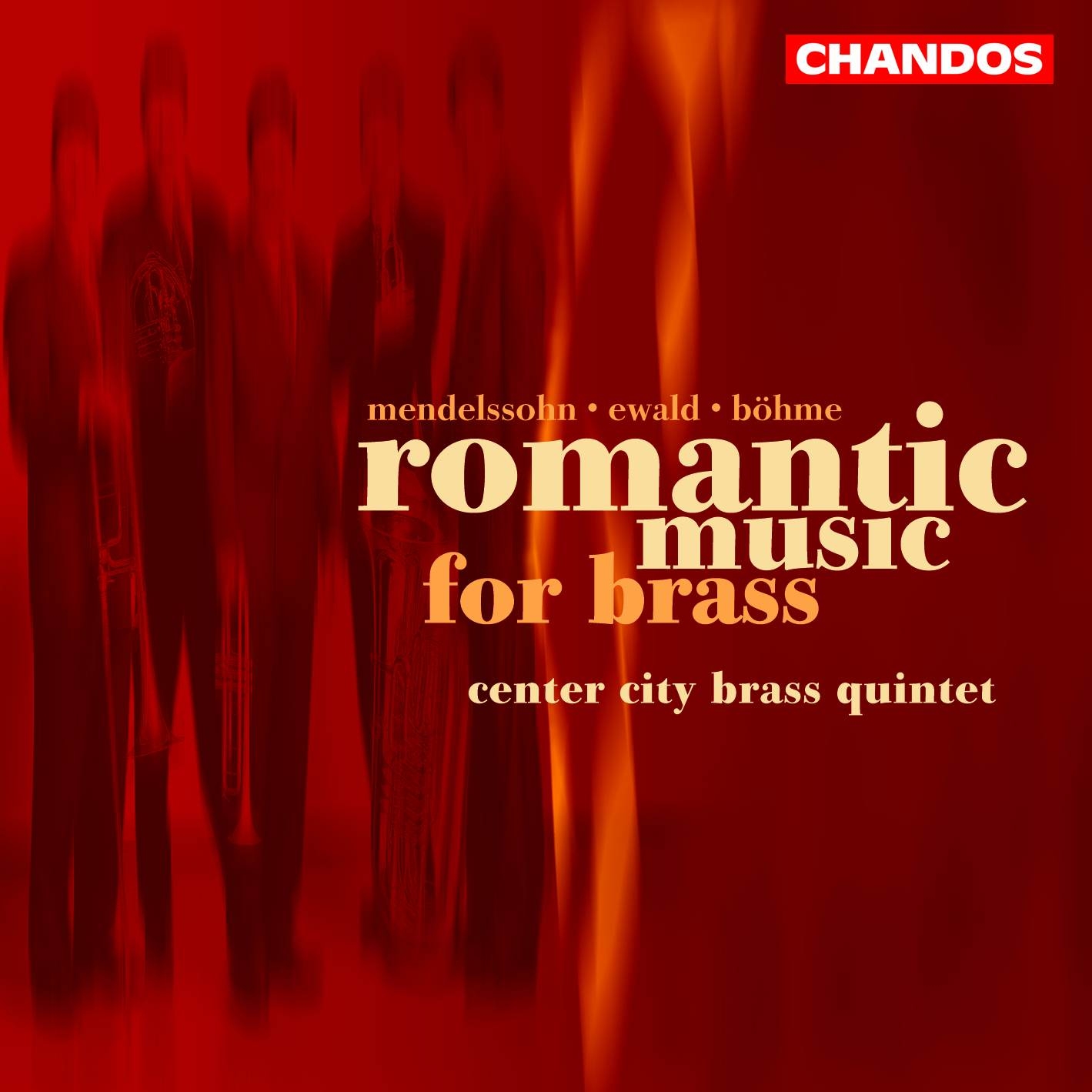
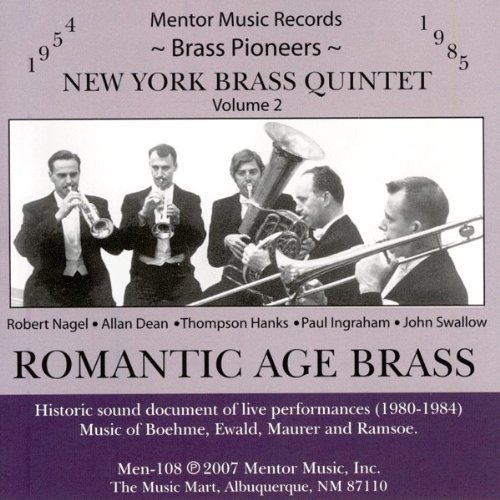
Today we will be listening to and studying the score of Oskar Böhme's Trompeten-Sextett in E-flat minor Op. 30 for cornet, two trumpets, bass trumpet (or alto horn), baritone horn (or trombone) and euphonium composed in 1907. It is a romantic work for six brass players in four movements. We will listen to the Atlantic Brass Quintet recording, "Five Chairs" on Summit Records from 2004. There are also excellent recordings by the Center City Brass Quintet, the Empire Brass Quintet,  and the NewYork Brass Quintet.

From Wikipedia:

Oskar Böhme, a son of Wilhelm Böhme, also a trumpeter, was born in Potschappel, a small town near Dresden, Germany, which is now part of Freital. For much of his early career, after studying trumpet and composition in the Leipzig Conservatory of Music until graduating in 1888, it is unknown what Böhme's musical activities were, though it is probable he concertized, playing in smaller orchestras around Germany.

From 1894-1896 he played in the Budapest Opera Orchestra and then moved to St. Petersburg, Russia, in 1897. Böhme played cornet for 24 years in the Mariinsky Theatre, turned to teaching at a music school on Vasilievsky Island in St. Petersburg for nine further years, from 1921-1930, and then returned to opera with the Leningrad Drama Theatre until 1934.

In 1934, however, the Great Terror began under Joseph Stalin and in 1936 a committee was established to oversee the arts in Soviet Russia. According to its anti-foreign policies, Böhme was exiled to Orenburg on account of his German heritage. It is said that he died there in 1938, though he was also said to be seen working on the Turkmenistan Canal in 1941. 

New Information about Bohme's death:

Dear Friends,

Here in a letter to the editor I wish to inform you and our readers that a Russian historian has recently discovered how the cornetist Oskar Böhme came to an end. In a chapter about Böhme in my book East Meets West I had written: “The exact date and the circumstances of his death will probably never be known.” In the wake of Stalin’s “Great Terror” (1928-54) more than four million people were deported and/or executed. Especially after Central Committee Secretary Sergey M. Kirov had been assassinated on December 1, 1934, Stalin initiated a great series of purges of artists and scientists, also banishing many persons of German origin, including Böhme, to distant places. Böhme was arrested on April 13, 1935 because of supposed – i.e. trumped-up – anti-Soviet propaganda and agitation and sentenced to three years of banishment from St. Petersburg to Orenburg (Stalinist name: Chkalov), a traditionally German city at the foot of the southern Ural mountains. Until 1938 he was teaching at a music school there, without the right of correspondence. Historian Anatoly Jakovlevich Rasumov, with access to the KGB archive, has since 1995 been publishing the names and short biographies of those who were assassinated by Stalin’s henchmen; his Leningrad Martyrologium has reached 14 volumes so far. He has discovered that in October 1938 (probably on the 23rd) Oskar Böhme was shot. See Christian Neef, “Archivar des Terrors”, Der Spiegel 53 (December 2015), 94-97, here 96.

- Edward H. Tarr

Monday, February 13, 2017

The Truth About Ewald

Viktor Ewald

This morning, we studied the score and listened to Ewald's Brass Quintet No.3. I gave you each a copy of the article History of the Four Quintets for Brass by Victor Ewald, written by André Smith for the International Trumpet Guild Journal. I would like you to read it and post on your own blog your impressions of this article. Some a

After you read the article, respond to the following questions in a post on your own blog.
  • What did you know about Ewald and his brass quintet before reading this article? 
  • What did this article teach you about proper research?
  • What questions did this article raise?
  • What are your thoughts on rotary vs. piston valve preferences mentioned in the article?
  • Do you agree with Forsyth who wrote, "There is in general no true legato on the trombone"
  • What are your thoughts about Smith's ideas on instrumentation mentioned on page 13.
  • In regards to the modern revival of Ewald's brass quintets, what roles did the following people play? Froides Werke, the American Brass Quintet, the Empire Brass Quintet?
  • What has been your experience both playing and listening to the Ewald quintets?

Some of the common questions regarding these brass quintets include "Why did he write them?" I first heard that Ewald was a teacher, a Civil Engineer and an amateur cellist who played in a string quartet called the Belaiv Quartet. But, as Smith brought out in his article, Ewald played many instruments, including tuba and cornet. He was also motivated and influenced by composers and brass artists of the day, and even by attending the 1893 World's Fair in Chicago.

He also points out his collaboration with the American Brass Quintet in preparation for a Carnegie Hall Recital in the early '70s, and the confusion and spread of the quintets back to Russia, and then into the hands of the Empire Brass through Froides Wekre.

Until relatively recently, it was believed that Ewald penned only three brass quintets, but as Smith points out, his first work was a brass quintet that many, including Ewald himself, thought the work unplayable - so he reworked it as a string quartet. Many got the story backwards, and thought that the fourth brass quintet was originally a string quartet.

The lesson I hope we learn from this article is the importance of accurate, and methodical research. Smith waited forty-three years to gather his information before publishing his articles. Think of that the next time you are writing a paper.

Wednesday, February 01, 2017

Listening Presentation Guidelines

Atlantic Brass Quintet recording session, courtesy of Bove Audio
After enjoying our first student listening presentation today, I thought I would provide some guidelines and suggestions that might clarify the aim of the sessions. I've amended the syllabus to reflect these guidelines below to read:
Student Listening Presentations (2)
  • Dates individually assigned (refer to class schedule)
  • Strive for a good variety of types of ensembles:
    • Small mixed or homogeneous ensembles (brass trio, horn quartet, etc.)
    • Brass quintet (tuba or bass trombone as bottom voice)
    • Large ensemble (brass choir, brass ensemble, brass band)
  • Strive for a variety of styles, nationalities, and eras
  • Balance original works against arrangements
  • Presentations may include videos, but be mindful of YouTube advertisements.
 The three main aspects to keep in mind are:
  1. Recording Quality - When possible, present professional recordings with excellent sound quality and engineering. Recordings should be evenly balanced, with good microphone placement and recorded in an acoustical environment that has sufficient reverberation without being too much so. Some live recordings may display much more energy and musicality than edited recordings, or may be the only recording available. Use these suggestions and your best judgement regarding assessing quality.
  2. Diversity - Ensure your presentation shows a diversity of types of ensembles, styles of music, a balance of original works for brass as well as quality arrangements. Strive to "research" outside of your comfort zone. We do want you to share recordings that you enjoy, but also try to discover something new to you and share that as well.
  3. Presentation medium  - It is recommended that you bring a laptop or smartphone that can be connected to my speakers. Playing from a playlist on Spotify, Pandora, Apple Music, or other streaming service should be fine. You may also bring separate CDs, or consider compiling the list onto a CD, which I can play from my stereo. As it says above, when using YouTube, be aware of advertisements. Perhaps limit your use of YouTube for recordings that is accompanied by video.

Tuesday, January 17, 2017

Welcome Students - Spring 2017


"Brass Candy Trio" by Jeremy Armitage
Welcome to Advanced Brass Ensemble Literature, Spring 2017! ABEL Central is the class blog, where you will find information about the class, as well as links to your own course-related blogs. On the right-hand side bar, you'll see the course number, syllabus, ways to follow, search and subscribe this blog, and links to the blogs of former students. Additionally, there are links to professional brass ensembles and other resources.

I will be posting here, generally once a week, on things we covered in class, answers to questions that came up in class, and anything else that might be of interest to this course. This blog is ten years old today, so take advantage of perusing older posts, as well as blogs by former students for ideas for your own blog.

Wednesday, April 27, 2016

Brass Ensemble Music From Other Cultures

Fanfare Ciocărlia
As I mentioned in class today, we as musicians are often musical ambassadors for our culture, and listening to brass ensemble music from other cultures is an excellent way to learn about both the similarities and differences between cultures. Musicians also know and embrace the value of diversity, for it is the source of inspiration and variety that often leads to the creation of new genres. There are brass band traditions around the globe, each with its own heritage and style, including the Balkans, South and Central America, Polynesia and India. I hope you enjoyed listening to this diverse playlist and also hope it inspires you to do further exploration on your own. Here is the list of recordings we sampled today of brass ensemble music from other cultures: 

Rusasca De La Buzdug - Fanfare Ciocarlia (Balkan Brass Band)

Canchis Tierra Linda – Banda San Martin de Sicuani (Peruvian Festival Music)

Obassanthi – Jaipur Kawa Brass Band (Indian Brass Band)

Paayaliyaa - Jaipur Kawa Brass Band (Indian Brass Band with vocalist)

Te Presumo – Banda el Recodo (Mexican Banda Pop Music)

Ishq Bina Ishq Bina – The Bollywood Brass Band (Indian Film music of A.R. Rahman;mixture of funk and raga)

Dola Dola - The Bollywood Brass Band (Indian Film music of A.R. Rahman; Latin influenced)

Ta Ka E Sola (He was a stranger) – Mailefihi College Band from the nation of Tonga.

Tuitui Tamafa #1 (Sewing and Eating While Standing) - ) – Mailefihi College Band from the Nation of Tonga

Lavemalie (Touch Me Gently) ) – Mailefihi College Band from the nation of Tonga; Polynesian folk song with vocalists. The three selections above are on the CD: Ifi Palasa Tongan Brass

Siupeli Silver #3 (Silver Jubilee) by Vilami Tu’ipulotu – Maopa Band of Kolofu’ou

Concertino Para trompete-Finale by José Urscino da Silva “Duda” – Quintetto Brassil

Coletanea '93-os Monges De St. Thomas by José Urscino da Silva “Duda” – Quintetto Brassil

We also viewed this recording of the Trombones de Costa Rica performing Curubandeando, an original work written for them by Costa Rican composer Vinicio Meza.

Here is a bonus video from YouTube of Shyam Brass Band performing and many others from their website.

Monday, February 08, 2016

A Trio of Trios

Today in class we listened to three trios for brass by Poulenc, Nelhybel and Plog:

1. Sonata for Horn, Trumpet and Trombone by Francis Poulenc (1922) performed by the The Pro Musica Brass Trio from their album Voyages for Brass Trio.


2. Trio for Brass by Vaclav Nelhybel (1965) performed by the University of Maryland Brass Trio from their album Brass Trios. Below is an embedded YouTube video with a scrolling score (no performers credited):


3. We heard the first part of Anthony Plog's Trio for Brass from the same album.

Ethan mentioned having seen an excellent video of the Poulenc that had an introduction my a musicologist and the players were from London. I haven't yet tracked it down, but the musicologist was probably Rachel Leach and the musicians were probably from the London Philarmonic. See this link for more notes.  

PS - I had originally planned on playing:
Quintet for Brass by Alexander Alyabyev (Also spelled Aliabiev)
Ensemble:  Montanus Brass Quintet
This was written in1847, making it the first brass quintet known, predating Bellon and Ewald. 


Here is an Apple Music link


Monday, February 01, 2016

Beethoven - Drei Equali & Sorg - Voices in da Fan

Today in class we listened to Drei Equali, three short funereal movements for trombone quartet composed by Beethoven in 1812 in Linz, Austria for "All Souls Day". This recording is of Four of a Kind, a trombone quartet consisting of Joe Alessi, Scott Hartman, Mark Lawrence and Blair Bollinger. The piece is somber and was reworked and performed at Beethoven's own funeral. To see a painting of Beethoven's funeral, see my earlier post.

Here are few links related to the subject:

Will Kimball, Professor of Trombone at Brigham Young University, maintains an alto trombone history timeline his website. He added this about the Drei Equali:
Added the entry below to the Alto Trombone History Timeline. It includes information from a firsthand witness about Beethoven’s Drei Equali, arguably one of the most important works in the history of the trombone. Among the noteworthy observations about the alto trombone is Glöggl’s note that, although his father’s collection included soprano and quart trombones, the instruments commonly used in Austria were alto, tenor, and bass trombones. Son of the Linz kapellmeister who commissioned the work, the younger Glöggl stayed in the music field, eventually becoming a music publisher in Vienna. His recollections were made specifically for publication in Thayer’s Life of Beethoven (for source, see Alto Trombone Bibliography).
1812—Linz, Austria: Beethoven writes his Drei Equale for 4 trombones, a work commissioned by Kappelmeister Glöggl of the Linz cathedral. Glöggl’s son, who later becomes a music publisher in Vienna, verifies that alto, tenor and bass are the instruments commonly in use, mentioning that in his father’s “collection of old instruments he had a soprano and a quart trombone, whereas only alto, tenor and bass trombones were commonly used.” He continues, “Beethoven wanted to hear an Aequale such as was played at funerals in Linz, and one afternoon when Beethoven was expected to dine with us, my father appointed three trombone players and had them play an Aequale as desired…” (Thayer 541).


Since we had already heard the Bellon last week, I decided to play a recent recording the Atlantic Brass Quintet mad of "Voices in da Fan", by our trumpeter Andrew Sorg. We recorded it on a CD with a new work for brass quintet and wind ensemble by Kevin Walczyk entitled Quintet Matinee with the UConn wind ensemble as part of the Sackler Prize.

This is Andrew's second brass quintet composition, the first being "Mental Disorders". If you are interested in hearing this piece, I've embedded a video of live performance by a student quintet from the Atlantic Brass Quintet Seminar below:


Sunday, January 31, 2016

Historic Brass Ensemble Music Listening Session

Le Rallye-Cor de Montmélian
Here is the complete playlist from our listening session on Historic Brass Ensemble Music:

Title: Greyner, zanner 
Composer: Heinrich Finck
Ensemble: Piffaro
Album: Stadpfeiffer:Music of Renaissance Germany

Note: This particular ensemble is a mixed group of period instruments, including shawms, dulcians, sackbuts, recorders, krumhorns, bagpipes, lutes, guitars, harps, and a variety of percussion. Although it is not exclusively a brass ensemble, this track is a good example of the Stadtpfeifer tradition of civic musicians employed in Renaissance Germany who, among other ceremonial duties, would perform from towers, playing fanfares and serving as "human fire alert systems." For more information, see the post called Stadtpfeifer, Alto Capella and Waits.

Title: Canzon per sonar in echo duodecimi toni a 10
Composer: Giovanni Gabrieli
Ensemble: National Brass Ensemble

Title: Canzon a 5 
Composer: Claudio Merula
Ensemble: English Cornett and Sackbut Ensemble
Album: Accendo - Music from the Time of Claudio Monteverdi

Title: La Bignani
Composer: Giovanni Cavaccio
Ensemble: English Cornett and Sackbut Ensemble
Album: Accendo - Music from the Time of Claudio Monteverdi

Title: Intrada and Courant from "Battle Suite"
Composer: Samuel Scheidt
Ensemble: American Brass Quintet
Album: ABQ Plays Renaissance/Elizabethan

Title: Dovehouse Pavan
Composer: Ferrabosco
Ensemble: American Brass Quintet
Album: ABQ Plays Renaissance/Elizabethan

Title: Les Plasirs de la Chasse
Composer: (traditional)
Ensemble: Le Rallye de Montmelian
Album: Cor de Chasse

Title: Ellen Bayne Quickstep
Composer: G. W. E. Freiderich
Ensemble: Empire Brass and Friends
Album: American Brass Band Journal

Title: Canzona Bergamasca
Composer: Scheidt
Ensemble: Eastman Brass Quintet
Album: Renaissance Brass Music

Title: Brass Quintet No. 1
Composer: Jean Francois Bellon
Ensemble: Ewald Brass Quintet
Album: Four Brass Quintets