| Meridian Brass |
Tuesday, April 16, 2013
Meridian Brass Marketing


Monday, April 08, 2013
Blog Post Brainstorming

- Blog about a work for brass ensemble that you like that we did not listen to or discuss in class. If you would nominate it for a "landmark work" explain why.
- Find a mediocre performance of a brass ensemble work on YouTube and then write a "virtual coaching" post. Be sure to provide positive feedback as well as constructive criticism.
- Compare a brass ensemble arrangement to the original work. Compare two recordings of the same arrangement.
- Discuss your experiences organizing a brass ensemble tour and share what you learned on the tour.
- Compare and contrast two pieces from the same time period, country, or composer.
- Write a review of a book or journal article related to brass ensemble literature, performing, or a related musical issue.
- Share what you know about composers who have written for brass ensemble for a particular region of the world.
- Get inspired by read each other's blog posts and create a post of your own on a similar topic.
- Give us a preview of your upcoming listening presentation.
- Read some of the older posts on ABEL Central and write a post inspired by a class form a previous year.
Monday, March 04, 2013
Behind the Scenes of Victor Ewald's Complete Quintets
Two of my colleagues in the Atlantic Brass Quintet recently recorded the complete Ewald Brass Quintets with Mark Gould, Dave Taylor, and Chris Komer. Here's a peek...
Tuesday, January 29, 2013
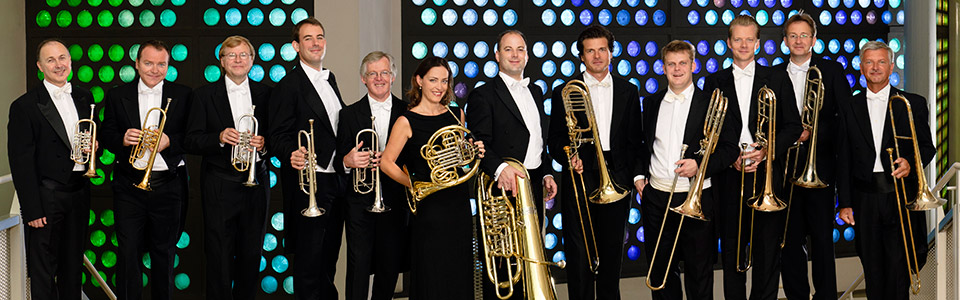
David Byrne, of Talking Heads fame and St. Vincent have teamed up and created a very unique pop album called Love This Giant that is centered around a brass band. The writing is very unique, and not at all like your typical rock horn section writing. It is minimalist in nature and the counterpoint and instrumentation is very complicated. Here is a clip from their recent appearance on David Letterman. Wikipedia has a link listing the personnel for the original recording.
Monday, April 23, 2012
The Evolution of New Orleans Brass Bands

1. Dirty Dozen Brass Band - L'il Liza Jane
2. Maryland My Maryland - Preservation Hall Jazz Band
3. Panama Rag (on piano) - Listen to a version on YouTube
4. Mississippi Rag, with Kid Ory. Here is a link to a cover of the sheet music from "the first Ragtime Two-Step every written"
5. Rebirth Brass Band - Do Watcha Wanna
6. Soul Rebels - 504, No Place Like Home, We Be Rollin'
Albums:
No Place Like Home (2009)
Unlock Your Mind (2011)
No More Parades (2006) - listen to this on LastFM
Mama Diggowns Brass Band website. Listen to them on their MySpace page.
We heard parts of:
7-9. St. James Infirmary (Traditional tune, but with a Reggae feel)
Mojito (Bounce Remix)
10. Brooklyn by Youngblood Brass Band website.
Fanfare for Fenway - John Williams
On Friday, 4/20/12, members of the Boston Pops Orchestra premiered a new work for brass and percussion called "Fanfare for Fenway". This is a clip of the performance.
Monday, April 16, 2012
On Innovation: Are there any truely new ideas?
 |
| Edgard Varèse |
Here are some interesting links related to innovation in classical music:
The eMusic Dozen: Classical Innovators
Top Ten Most Innovative Composers by William C. White
The Birth of the New: Reflections On Innovation in Music by Thomas May and the San Francisco Symphony
Innovation: Inspiration from Reinventions of Classical Music by Olin Hide
Music’s Greatest Innovator: Celebrating Haydn on the 200th anniversary of his death by David Hurwitz from Listen
Aaron Copeland: About the Composer from PBS
Visionaries: Musical Innovator Tod Machover from WBUR
Wednesday, April 11, 2012
More About Bernstein
His daughter, Jamie Bernstein offers some very valuable insight into the contradictions in her father's life and compositions. The excerpt below, from her website, is from a speech entitled A Talk Before MASS, which she gave in Salt Lake City in May of 2009:
Looking back on my father’s creative life, I see two main engines driving my father forward: the contradictions in his personality, and his perpetual confrontations with figures of authority. Of all Leonard Bernstein’s works, none demonstrates a grander synthesis of all these creative cross-currents than MASS. As a result, MASS is his most deeply personal work.Here is a link to NPR's article Revisiting Bernstein's Immodest 'MASS' where you can read about a revival of the work and listen to excerpts. The brass is most prominent in the second selection, Prefatory Prayers.
Let me start with the contradictions. On the one hand, he was the most extroverted guy you could ever meet. How he loved people! All kinds of people. He loved playing the piano at parties till the wee hours; all-night talk sessions with students; noisy dinners with family and friends. This was the Lenny that became a conductor and a teacher, the communicator extraordinaire, on the podium and on television.
On the other hand, Leonard Bernstein was a composer: an introverted, lonely dreamer who stayed up all night working, chain-smoking cigarettes and staring down his demons.
Within Bernstein the composer, there were yet more contradictions. He wrote for the concert hall, but he also wrote for the Broadway stage. He was a classically trained musician, but he loved the popular music he heard on the radio as he grew up in the 1920’s, 30’ and 40’s. His conducting mentor, Serge Koussevitsky, strongly advised his young pupil to stop writing for the Broadway stage; Koussevitsky thought it was low-class, insignificant music. Luckily, Leonard Bernstein didn’t follow his teacher’s advice – an early example of his lifelong impulse to buck authority.
Eventually, my father found ways to cross-pollenate the two kinds of music he loved best, creating a perfect bridge between the concert stage and the Broadway pit. Leonard Bernstein's orchestral music is joyous, full of tunes, and bursting with catchy rhythms -- while his Broadway scores are as elegantly constructed as a Beethoven symphony. MASS combines all of these elements, and more, into a single, passionate expression of my father’s own multifarious personality.
Wednesday, March 28, 2012
Ten New Directions for Brass
 | ||
| Gaudete Brass |
1. Lansing McCloskey's What We Do Is Secret a brand-new composition for solo brass quintet and wind ensemble.
2. Meridian Arts Ensemble YouTube demo for their Channel Classics CD called Brink.
3. Gaudete Brass plays Ravel with Theremin
Trois beaux oiseaux du paradis by Maurice Ravel - performed by thereminist, Randy George and the Gaudete Brass Quintet. download video in High Definition at: http://bit.ly/GBQRGM4. YouTube video of a live performance of Alma llanera by the Venezuelan Brass Ensemble.
Arrangement for brass quintet and voice by Paul Von Hoff. Video produced by Randy George. Recorded on September 2, 2010 in Long Beach, CA.
The theremin was invented in 1919, about five years after Ravel composed this work.
The Venezuelan Brass Ensemble came into being in 2003 from Venezuela's state youth orchestra system (FESNOJIV) under the patronage of José Antonio Abreu and Thomas Clamor. This unique, state-sponsored system comprises some 200 children's and young people's orchestras and about 100 music centres, spread all over the country. In the meantime, thanks to this work, numerous successful youth ensembles have emerged. Leading the way is the “Simon Bolivar Youth Orchestra of Venezuela”, where most of the members of the “Venezuelan Brass Ensemble” come from.
5. NU Directions Chamber Brass
NU DIRECTIONS CHAMBER BRASS is a contemporary chamber ensemble dedicated to breaking down barriers of musical categories. This rhythmically explosive genre-bending brass and percussion ensemble brings together classical, jazz, and free improvising musicians to combine their talents and form a new innovative brand of chamber music. NDCB is comprised of two trumpets, two trombones, and two percussionists. Each musician offers his or her own voice to create a truly unique sound.
Trumpet artist, composer, and NDCB founder Thomas Madeja created this ensemble in response to a growing need for accessibly presented original sounding contemporary music. This also drives the group’s commitment to education. In a concert setting, master class, or interactive recital, NDCB invites its audience to experience its unique creative process.
There are no limitations in regard to performance venues either. NDCB has performed in such varied institutions as concert halls, schools, salons, museums, churches, and jazz and nightclubs. Audiences from all walks of life continue to be intrigued and stimulated by this truly one of a kind ensemble.
7. TILT BrassThe idea for this brass ensemble came about in the summer of 2010.
The ensemble consists of top musicians from both the classical and jazz scene. This is their realisation of a dream. During concerts, the audience will hear the “classical” brass instruments of the ten piece ensemble, but the musicians will also unite jazz and classical elements, thus explaining the name: 'New Brass Directions' for this forceful musical ensemble. The concerts will offer a lot of diversity, and the visual aspect will also play a part. The audience will be entertained and surprised.The Belgian composer and jazz trombone player Lode Mertens composed King of Spain for the classical/jazz combination; the British composer and jazztrombone player Mark Nightingale wrote Our House for the same setting. For the classical ten piece ensemble the American composer Stanley Friedman created a Concerto for Brass. Steven Verhaert made an arrangement of Weills Die Dreigroschenoper and Isoldes Tod from Wagners opera. Renowned trumpeter and composer Bert Joris has agreed to compose something for the classical/jazz combination.The key elements are virtuosity and emotion.
Curious? Please keep an eye on the Media and Agenda pages, for YouTube clips, concert dates or public rehearsals.
"...a Brooklyn-based experimental music organization dedicated to expanding the world of contemporary brass performance by producing innovative concert programs and recording projects, and by commissioning new works for its two ensembles, TILT Creative Brass Band (CBB) and TILT SIXtet (bios below). Since forming in 2003, TILT Brass has presented the work of over 50 composers, including group members and local colleagues, as well as established masters. TILT’s repertoire engages its audience with musical experiences ranging from sonorous soundscapes to the raucous strains of a street band, from freely improvised explorations to the precision and clarity of fully notated chamber music (often combining the latter two within a single work)."8. Metalofonico a modern brass ensemble
[In the interest of full disclosure, I am a member of this group, which is comprised of members of the Meridian Arts Ensemble, the Atlantic Brass Quintet, and members of the Los Angeles Philharmonic.]9. Performance of Philip Glass' Brass Sextet on YouTube as performed by London Gabrieli Brass
Brass Sextet, composed in 1962/64 for two trumpets, two horns, trombone and tuba, is something of a curiosity. It was written when Philip Glass, after graduating from the Julliard School of Music, was composer-in-residence with the Pittsburgh Public Schools on a Ford Foundation project. This was several years before he began to become known for the repetitive minimalist techniques which launched him to fame and have enabled him to enter some of the world's leading opera houses.
The Sextet is not listed by Glass now, but it was actually published in England in 1966 by Novello & Co. in their Music for Today Series edited by Geoffrey Bush. The writing shifts rather uneasily from consonance to dissonance but there is plenty of American precedent behind the Hymn, Ballad and gently jazzy Finale.
— Peter Dickinson
Billy Childs was born in Los Angeles on March 8th, 1957. Having demonstrated an aptitude for piano as early as age six, Childs developed rapidly, and at age sixteen entered the USC-sponsored Community School of the Performing Arts, studying theory with Marienne Uszler and piano with John Weisenfluh. In 1975, he entered USC as a composition major, graduating four years later with a bachelor of music in composition under the tutelage of Robert Linn.
Since then Mr. Childs has received a number of orchestral commissions from, among others: Esa-Pekka Salonen and the Los Angeles Philharmonic, the Detroit Symphony Orchestra under the baton of Leonard Slatkin, the Los Angeles Master Chorale, The Kronos Quartet, the Lincoln Center Jazz Orchestra, the American Brass Quintet, and the Dorian Wind Quintet.
After apprenticing with Freddie Hubbard and J.J. Johnson in the late seventies and early eighties, Childs’ solo jazz recording career began in 1988, when he released Take For Example, This... the first of four critically acclaimed albums on the Windham Hill Jazz label. He followed that album with Twilight Is Upon Us (1989), His April Touch (1992), and Portrait Of A Player (1993). His next album, I’ve Known Rivers on Stretch/GRP (now Stretch/Concord) was released in 1995, followed by The Child Within, released on the Shanachie record label in 1996. Most recently, Mr. Childs has recorded two volumes of jazz/chamber music – Lyric, Vol. 1 (2006) and Autumn: In Moving Pictures, Vol. 2 (2010) – music which is an amalgam of jazz and classical elements, developed with his ensemble through rehearsal, performance, and recording, over the course of ten years.
Thus far, in his career, Childs has garnered ten Grammy nominations and three Grammy awards: two for best instrumental composition (Into the Light from Lyric and The Path Among The Trees from Autumn: In Moving Pictures) and one for best arrangement accompanying a vocalist. In 2009, Childs was the recipient of a Guggenheim Fellowship and in 2006 was awarded a Chamber Music America composer’s grant.
As a pianist Childs has recently performed with, among others, Yo-Yo Ma, Sting, the Los Angeles Philharmonic, the Detroit Symphony, the Kronos Quartet, Wynton Marsalis, Jack DeJohnette, Ron Carter, the Ying String Quartet, the American Brass Quintet, and Chris Botti. In January 2010, The Detroit Symphony (Leonard Slatkin conducting) premiered Childs’ Concerto For Violin And Orchestra with Regina Carter as soloist. Upcoming commissions include a new piece for the Ying Quartet and another new work for the Kronos String Quartet.
Class Schedule Revision
 |
| Sonus Brass |
No class next week at all (Monday 4/2 and Wednesday 4/4!) Please use the extra time to catch up on your blogs and final projects.
The next class meeting is Monday 4/9, when we will study the landmark work by Leonard Bernstein, Dance Suite for Brass Quintet.
Wednesday 4/11, Megan S. will be presenting recordings.
Monday 4/16, we will be discussing current brass ensemble topics.
Wednesday 4/18, we will all contribute to a group listening session. Please bring in 5 minutes of music that we haven't yet heard in class.
Monday 4/23, we will be discussing current brass ensemble topics.
Wednesday 4/25, I will be presenting a listening session.
Monday 4/30 and Wednesday 5/2 are reserved for final presentations. Your assigned dates are below:
Monday 4/30: Nate, Tania, Rachel and Meagan C.
Wednesday 5/2: Shelby, Dave, Megan S. and Adam.
Monday, March 19, 2012
Böhme Sextet
 |
| Chicago Chamber Brass |
Today we studied the Sextet in E flat minor, Op 30 by Oskar Böhme which was written in 1906.
Here is a link to the Chicago Chamber Musicians page, where you can hear recordings of two live performances. The musicians are:
Barbara Butler, Trumpet
Charles Geyer , Trumpet
Robert Singer , Trumpet
Gail Williams , Horn
James Campbell , Trombone
Gene Pokorny , Tuba
Biography of Oskar Böhme, from Oxford Music Online:
(b Potschappel, nr Dresden, 24 Feb 1870; d ?Chkalov, Ural region, ?1938). German cornettist and composer. He is thought to have trained with his father, Heinrich Wilhelm Böhme (b
1843), a music teacher, and from 1885 he toured as a soloist. From 1894
to 1896 he played in the orchestra at the Royal Hungarian Opera House,
Budapest. Between 1896 and 1897 he studied composition with Jadassohn at
the Leipzig Conservatory. He then moved to St Petersburg, playing in
the Mariinsky Theatre Orchestra from 1897 to 1921, teaching in a musical
college on Vasilyevskiy Island from 1921 to 1930, and playing in the
Leningrad Drama Theatre orchestra from 1930 to 1934. Like many people of
German origin, he was banished by Stalin to Chkalov (now Orenburg) and
taught at a music school there from 1936 to 1938. The year of his death
is uncertain; one eyewitness claims to have seen him at hard labour on
the Turkmenian Channel in 1941. He composed 46 known works with opus
numbers, including a lavishly Romantic concerto in E minor op.18 for
trumpet in A (1899), which has remained in the repertory.
Citation:
. "Böhme, Oskar." Grove Music Online. Oxford Music Online. 19 Mar. 2012 <http://www.oxfordmusiconline.com/subscriber/article/grove/music/43968>.
Wednesday, March 07, 2012
On Shelby's Presentation

In the portion about the tradition of New Orleans Brass Bands and funerals, we learned a lot, but it also raised some questions. Is there a standard, traditional set of rules to an authentic second-line funeral? What are the roles of the key players and do they have titles? What is the significance and history behind the decorative umbrellas carried by processors?
Our study of the New Orleans Brass Band tradition also reminds us of the effects of Hurricane Katrina on the people, culture and economy of this great and historic city.
Here is a link to a video of a lecture titled Rebuilding the "Land of Dreams": Expressive Culture and New Orleans' Authentic Future given by Nick Spitzer, University of New Orleans, specifically Part 7, the "Second-Line".
From New Orleans Online, here is a link about the Social Aid and Pleasure Clubs that sponsor the parades and a link about "Jazz Funerals". Also read Block Parties In Motion: The New Orleans Second Line Parade from FrenchQuarter.com
The effects that Hurricane Katrina had on music and the arts is a major topic of study and much discussion. Not only does it include issues of survival and revival, but of the challenges of bureaucracy, government, racial equality, disaster preparedness, and communication. Here is a link to After the deluge: 29 remarkable works inspired by Hurricane Katrina to give you an idea of the broad scope and influence of Katrina and how the sorrow, anger, and grief manifest themselves through the arts.
Listed below are more links related to the topic:
New Orleans Habitat Musicians' Village website
Sweet Sounds of Home from the Village Voice
Treme Brass Band: Living and Breathing New Orleans from NPR (be sure to listen to the radio show)
Brass Bands of New Orleans from KnowLA
Selected Books and Article on Social Aid & Pleasure Clubs and Second Lines from Tulane University
Monday, February 20, 2012
 |
| Francis Poulenc |
Here is a link to the dissertation on Poulenc's Sonata for Horn, Trumpet and Trombone by John Cord (UNT), and here are a few excerpts from the paper:
On a larger scale it is interesting to note what might be considered an inconsistency in the delivery of important themes throughout the first and third movements. Poulenc chooses to use a variety of dynamics and articulations when the main themes re-enter. This is not an arbitrary adaptation of musical elements but a finely crafted musical pursuit. I believe that Poulenc is seeking to achieve a “textural shift” in the music at these various points. He uses an alternating pattern of articulations throughout the piece to develop an internal theme and variations structure. This alternating pattern of articulations is developed by applying a certain articulation to a part for a particular theme.
//
There is a mistake in the trumpet part pertaining to articulations found in m. 26. In this measure, the trumpet part is missing a slur over the group of four sixteenth notes. This is an obvious mistake the score containing all three parts does show the slur in the trumpet part, this particular figure is found two measures earlier in the part and does utilize the slur and the other two parts contain slurs in this measure. If this were a discrepancy in articulations in the first or third movement, the question may be raised as to whether this may be another example of Poulenc developing texture through articulations, but the second movement shows no inconsistencies in articulations whatsoever throughout the movement, making his intentions clear that they should remain consistent through the end of the movement.
//
Upon first glance it would seem that simple misprints and copying errors may be the cause of this inconsistent application of articulations. However, after closer examination, it is apparent that Poulenc‟s intention is to consistently create contradictions between the instruments. The combination of articulations between the three instruments for specific themes is never repeated in its exact state. This pursuit to create new textures through fluctuation of articulations is achieved in some cases through the alteration of even a single pitch, and in other cases, the lack of articulation marking is in fact the alterationRelated Links:
Official Poulenc Website
Pro Music Brass Trio Recording
Guy Touvron recording
Tuesday, January 31, 2012
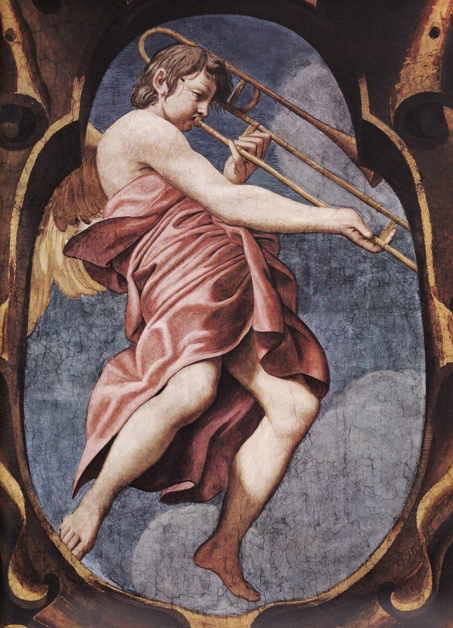
Trombone History Timeline
Monday, January 30, 2012
 |
| American Brass Quintet |
The criteria I suggested, for your final project and for future professional reference, were:
- Longevity - How long has the ensemble existed?
- Consistency - What personnel changes have they undergone?
- Programming - What is a typical program for this ensemble?
- Focus & Mission - What are the ensembles goals and purpose?
- Performances - How many and what types of performances?
- Recording - How many? Label? Repertoire?
- Publicity - Press Kit, Website, and Reveiws
- Innovation and Originality - What have they done for the genre?
- Affialiations - Managment, Institutions, Events
- Awards and Accomplishments - Competitions, major honors, firsts?
- Commercial Success - Fee? Fame? Income? Contributions?
Composers & Places in Brass Ensemble History
Composers:
Malcolm Arnold - Classical Net
Walter Hartley
Fisher Tull
Alec Wilder - Classical Net
Alvin Etler - Wikipedia,
John Philip Sousa
Monique Buzzarté's Database of Brass Music by Women Composers
Giovanni Gabrieli - Wikipedia
Jan Bach
Samual Adler - Presser Online
William Kraft - Presser Online
Eric Ewazen
David Sampson
Gunther Schuller
Vaclav Nelhybel Official Web Site
Elliott Carter
Poulenc, Francis
Places:
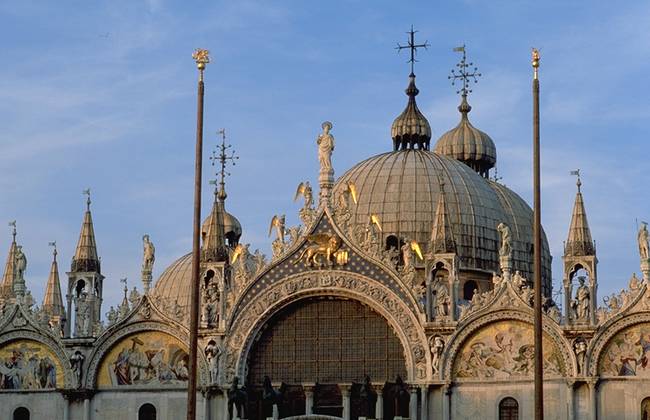
Venetian Music of the Renaissance
Brass HistoryVenetian School - Wikipedia
Venetian School: From Answers.com
Goldman Band - Wikipedia
Russia the Great
Civil War Band Music: The American Brass Band Movement
The Brass Players Museum
Music In The Renaissance
Other places and composers will eventually be listed here. I am currently researching other hotbeds of brass ensemble activity, such as Vienna, Berlin, Paris, and New York. If you find anything regarding these places, or more composer sites, please post them in a comment or email them to me.
Professional Brass Ensembles - Week I
 |
| American Horn Quartet |
American Horn Quartet
Trans Atlantic Horn Quartet
Bones Apart
New England Trombone Quartet
Sotto Voce Tuba Quartet
Ensemble de Trompettes de Paris
Saint Louis Brass Quintet
Proteus 7
Boston Brass
Philadelphia Brass
Center City Brass Quintet
Trombones de Costa Rica
The Dirty Dozen Brass Band
Youngblood Brass Band
Women In Brass
Synergy Brass Quintet
Royal Danish Brass
Gomalan Brass
Resounding Brass Trumpet Duo
Wednesday, January 25, 2012
Listening Session #1 - Historic Brass Ensemble Music
The YouTube video below features the Sonata Pian e Forte from Gabrieli's "Sacred Symphonies". This performance is by the brass section of the Bayerische Staatsoper, conducted by Zubin Metha.
This is the listening list from today's class:
This is the listening list from today's class:
- La Feliciana a 4 by Adriano Banchieri and La Bignani by Giovanni Cavaccio recorded by The English Cornett and Sackbut Ensemble.
- Canzon I by Peuerl recorded by Atlantic Brass Quintet.
- Canzona by Samuel Scheidt recorded by the trombone quartet Four Of A Kind.
- Canzona Duodecimi Toni by Giovanni Gabrieli.
- The New Year's Gift by Anthony Holborne recorded by Atlantic Brass Quintet.
- Les plaisirs de la chasse, and Le chevreuil recorded by the Cor de chasse ensemble, Le Rallye-Cor de Montmélian.
- Jewel Waltz and Ellen Bayne Quickstep by G.W.E. Friederich recorded by the Empire Brass Quintet & Friends on The American Brass Band Journal.
- Quintet No. 2 in C major (c. 1850) by Jean François Victor Bellon Recorded by the Ewald Brass Quintet. [I. Allegro, II. Minuetto, III. Andante, IV. Rondo] Rusasca De La Buzdug (traditional) recorded by the Balkan Brass Band, Fanfare Ciocărlia
Tuesday, January 24, 2012
Ewald Articles on ICON
| Viktor Ewald |
Subscribe to:
Posts (Atom)